
x
Our website uses cookies. By continuing to use the site, you agree to our use of these cookies. To learn more about how we use the cookies and how you can manage them, please see our cookies policy.

Translating documents for French citizenship is a crucial step in ensuring the application process runs as smoothly as possible. It is important that the translation of your documents is performed by a professional translator who is recognised and accepted by French authorities. Any deviation from this standard may result in delays, requests for resubmissions or even rejection.
This guide will explore the documents that will require translation when applying for French citizenship, as well as the importance of seeking professional help from certified translators and immigration lawyers (Avocats).
Click on the links below to jump to that section:
Discover when an apostille is required and how it can streamline the citizenship process.
Browse the required documentation for French citizenship, which needs to be translated.
Compare certified verses sworn translations and the impact on citizenship applications.
How to navigate the certain challenges when applying for French citizenship.
Giambrone & Partners provide tailored solutions to foreign nationals wishing to obtain French citizenship – learn why you need legal assistance.
Read common queries on French citizenship.
In the European Union, official documents require an apostille stamp to confirm the authentication and to make them valid if used in another country. The apostille process dates back to 1961, when the Hague Apostille Convention was drafted by the Hague Conference on Private International Law (HCCH).
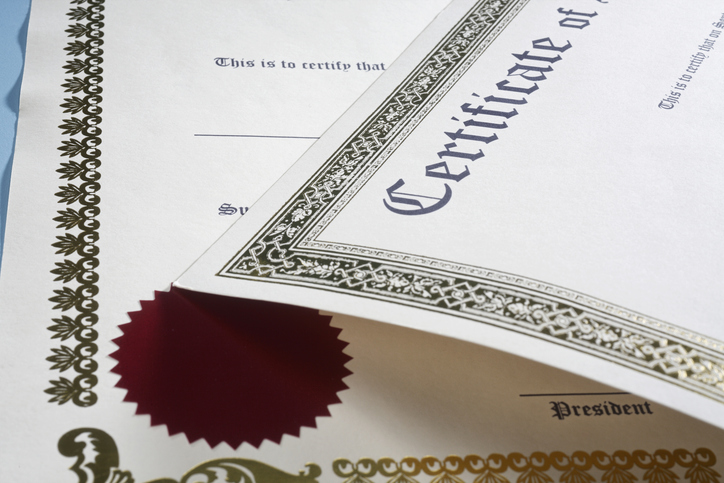
The function of the apostille is to simplify the procedure of validating and accepting foreign documents by creating a universal sign of authentication. The treaty certifies that documents with an apostille are valid and should be accepted when issued in other member states.
An apostille is only used by the 92 countries that are signatories to the Hague Convention, including the UK, Spain, Italy, the US, the Netherlands, and France. If a document requires an apostille, it is typically attached to the back and displays the name of the issuing authority, the country, and the date of issue, verifying the signature, seal, or stamp.
Documents that may require an apostille include birth certificates and marriage certificates. When applying for French citizenship, these documents may vary depending on the pathway chosen. For example, citizenship by descent may require applicants to prove their parents' or grandparents’ French nationality through a birth certificate, which will require an apostille.
Apostilles are issued by the authorities of the country where the document was created; in France, this is typically done by the French Court of Appeal (Cour d'appel).
Obtaining French citizenship is a straightforward process, depending on the pathway chosen. Applicants will need to compile a dossier of core documents required to be submitted alongside the citizenship application form.
All foreign-language documents must be translated into French by a sworn translator (trasducteur assermenté) registered with the French Court of Appeal (Cour d'appel).
The required documents for French citizenship applications generally include:
There are exceptions depending on your specific circumstances, which may require additional documents. For example, if you are applying for citizenship by marriage to a French citizen, you will need to provide additional documentation such as proof of your spouse’s French nationality, marriage certificate, proof of cohabitation through a recent utility bill, and proof of the dissolution of any previous marriages (if applicable). All these documents must be translated into French if they are not already in French.
If you have any children, copies of their birth certificates should also be submitted.
It is important to ensure that all documents are valid and submitted in full. Minor omissions or errors may delay the application process and can ultimately result in rejection. To prevent this, consider seeking legal assistance to simplify the application process.
Giambrone & Partners is an international law firm with experience in handling French visa and residence permits, as well as citizenship applications by marriage, naturalisation and descent. Our expert immigration lawyers are well-versed in changing nationality laws and fully aware of French immigration regulations, providing tailored guidance throughout the citizenship application process.
If you are interested in learning more, request a callback with Giambrone & Partners to discuss your circumstances.
To discuss your circumstances, Contact us today.
To discuss your circumstances, Contact us today.
+44(0)207 183 9482
If you need to translate any documents for your citizenship application, the right type of translation must be submitted to avoid delays or rejection. Not all certified translators meet the legal requirements for French citizenship applications.
A sworn translation (traduction assermentée) is performed by a court-authorised translator legally registered with the French Court of Appeal. They are the only professionals recognised by French authorities and are required for valid translations of foreign documents for citizenship applications. Sworn translations will be required for documents that need to be drafted in French, such as birth certificates, marriage certificates, educational diplomas and other identity documents.
You can identify a sworn translation by its stamp, signature, and declaration, which attest to the legality and accuracy of the document.
A certified translation is not accepted for French citizenship applications. Countries, such as the UK and the US, offer professional services where a translation is accompanied by a signed statement to determine that the document is accurate in the original language.
Although they are valid in the home country, for the purpose of French citizenship, documents with a “certified” translation may be rejected due to non-compliance.
To avoid delays or rejection, consider the following before submitting your final application:
As aforementioned, French immigration authorities will not accept translations of foreign documents by a sworn translator who is registered with a French Court of Appeal.
The translated documents must include an official stamp, signature and certification statement by the court-authorised translator. Documents using an unaccredited translator may be returned, causing delays to the citizenship application process.
All documents submitted should have names and dates that match exactly throughout all translations. This includes accents, spelling variations, titles, date/month formats, and the inclusion of middle names. Discrepancies between documents may result in administrative errors and require further clarification.
It is essential that the compiled dossier meets the legal requirements and adheres to the examples set by French authorities. Consider the layout and how the documents are presented.
All pages must be numbered and stapled or bound together, showcasing the sworn translator’s signature and stamp on the translated documents. Proofread all the text and ensure all documents are included, signed and laid in the correct order.
Although all documents are required to be in the French language, it’s beneficial to submit the original documents in their native language (such as English). This aids the authenticity of the documents, and provides comprehensive information to French immigration authorities
Certain documents, such as birth or marriage certificates, may also require an apostille to confirm authenticity. An apostille should be added to the original-language document before it is translated. After the document is apostilled, it should then be translated into French by a sworn translator (including the apostille).
If the required documents are without an apostille, this may result in citizenship rejections due to administrative errors.
To avoid common mistakes and ensure the application process for French citizenship runs smoothly, consider expert legal advice from immigration lawyers experienced with obtaining citizenship.
Giambrone & Partners has a proven track record of supporting foreign nationals through French citizenship applications, including naturalisation, marriage, and descent pathways.
Working with a network of sworn translators, our immigration lawyers (Avocats) will ensure that all required documents are legally compliant, consistent, and translated into French, thereby removing administrative errors to avoid delays or rejection.
Discuss your circumstances further and request a callback with Giambrone & Partners’ French lawyers here.
To discuss your circumstances, Contact us today.
To discuss your circumstances, Contact us today.
+44(0)207 183 9482
No. French authorities will only accept documents translated by a sworn translator authorised by the French Court of Appeal.
No. Certified translators from countries other than those recognised by French authorities will not be accepted.
Depending on the volume, sworn translations typically take between one and three weeks to complete. Consider undergoing this process through your immigration lawyer, who will help expedite this transaction and monitor the timeframe.